3 hours ago
New Study Reveals Ecological and Social Drivers of Same-Sex Sexual Behavior in Non-Human Primates
READ TIME: 3 MIN.
A new scientific study has identified key ecological and social factors driving same-sex sexual behavior among non-human primates, challenging long-held views of it as a rarity in the animal kingdom. Published on January 12, 2026, in *Nature Ecology & Evolution*, the research analyzed data from 491 non-human primate species and documented this behavior in 59 species, including lemurs, great apes, and monkeys across the Americas, Africa, and Asia.
Lead researcher Vincent Savolainen, a biologist at Imperial College London, explained that same-sex sexual behavior—such as mounting or other stimulation between individuals of the same sex—has been observed in over 1, 500 species across the animal kingdom, with records dating back to ancient Greek philosopher Aristotle. Previously dismissed as a "Darwinian paradox"because it does not directly contribute to reproduction, recent evidence indicates it can be partially heritable and offer evolutionary benefits, such as forming alliances that improve access to mates.
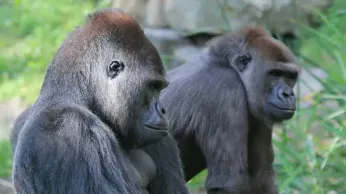
The study found that this behavior is more prevalent in species facing harsh environmental conditions, including drier climates, scarce food resources, and high predator pressure—for example, Barbary macaques in food-limited habitats or vervet monkeys evading big cats and snakes in Africa. It is also common in primates with significant size differences between males and females, such as mountain gorillas, which often live in large groups with intense competition and rigid hierarchies. Species with similar male-female sizes, by contrast, tend to form smaller pairs or family units with lower rates of such behavior.
Researchers propose that same-sex sexual behavior serves as a flexible social tool to reduce tension, build alliances, and maintain group cohesion under stress. Chloe Coxshall, lead author from Imperial College London's Georgina Mace Centre for the Living Planet, stated: "Same-sex sexual behaviour is widespread across non-human primates, but we see different patterns of social behaviours and interactions across the different species. Our study shows how these patterns are influenced by environmental factors, as well as by the social systems that the primates live in. "
Professor Vincent Savolainen added: "Our research shows that same-sex sexual behaviour is an integral part of many non-human primate societies, and it seems to help the animals to bond and maintain group harmony. " His earlier work on rhesus macaques in Puerto Rico over eight years revealed that males engaging in same-sex mounting form alliances granting better access to females and potential offspring, with heritability estimated at over 6% in some cases, modulated by environmental factors.
The research used structural equation modeling to link environmental pressures to life history traits—like lifespan and maturity age—and social structures, which in turn predict same-sex behavior prevalence. Its widespread occurrence across primate lineages points to "deep evolutionary roots"and multiple independent origins, normalizing it as a common aspect of primate social life akin to foraging or predator defense.
While the study notes parallels for human ancestors facing similar pressures, Savolainen emphasized: "There are things that are completely unique to modern humans, who have a complexity of sexual orientation and preference that we do not address at all. " The authors warned against misuse, such as claims that social equality eliminates same-sex behavior in humans. Anthropologist Isabelle Winder of Bangor University, not involved in the study, praised its methodological rigor in illuminating evolutionary complexities of human-like behaviors.
For LGBTQ+ communities, the findings underscore the natural prevalence of diverse sexual behaviors in nature, potentially countering narratives pathologizing same-sex attraction by rooting it in adaptive social strategies observed in our primate relatives. Examples include male chimpanzees in Uganda's Kibale Forest and bonobos using such interactions for bonding in challenging conditions. This body of work, cross-verified across peer-reviewed journals and university releases, highlights how affirming scientific evidence supports viewing sexual diversity as evolutionarily integral.